Capillary Tube Side Freezing in AC Systems – What It Means and How to Fix It

When an air conditioner exhibits frost at the evaporator inlet, specifically starting from the capillary tube side and spreading along the evaporator surface, this may appear as a normal frosting pattern. However, excessive or full-surface frosting is a red flag that indicates inefficiencies or faults in the system that need immediate attention.
🔍 Common Causes of Inlet Frosting
-
Low Refrigerant Charge
Insufficient refrigerant leads to low suction pressure and lower evaporating temperature, causing premature frosting as the refrigerant hasn't fully vaporized. -
Poor Airflow or Heat Exchange
Dirty filters, slow fan speed, or clogged fins reduce heat absorption, preventing the refrigerant from evaporating properly. -
Capillary Tube Blockage
Partial clogging slows refrigerant flow, creating localized cooling and frost buildup at the inlet. -
Low Load or Cold Ambient Temperature
If the indoor room is too cold or underloaded, refrigerant evaporates slowly, leading to overcooling and inlet frost. -
High Indoor Humidity
Moisture condenses quickly on the evaporator surface, especially near the capillary tube outlet, forming frost. -
Thermostat Malfunction
If the temperature sensor or control logic fails, the compressor may run excessively, causing overcooling and frost accumulation.
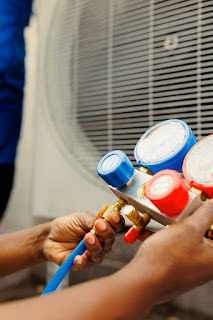
Diagnosing AC Evaporator Frosting at Capillary Tube Inlet: Causes & Solutions
🛠️ Diagnostic and Repair Steps
| Step | Task | What to Check |
|---|---|---|
| 1️⃣ | Measure Pressures | Suction pressure below 3 kg/cm² (~43 psi) often indicates undercharge |
| 2️⃣ | Verify Refrigerant Charge | Use leak detection → vacuum → charge by weight |
| 3️⃣ | Check Airflow | Inspect fan speed, filters, and evaporator fins |
| 4️⃣ | Inspect Capillary/Expansion | Look for pressure fluctuations and subcooling spikes; disassemble if needed |
| 5️⃣ | Assess Environment | If ambient temperature is too low, activate defrost logic or adjust settings |
| 6️⃣ | Check Thermostat/Sensors | Ensure correct sensor placement and compressor control |
| 7️⃣ | Vacuum & Dry System | Moisture causes ice blockage; vacuum to 500 micron and replace filter drier |
📊 Reference Pressure Table
| Refrigerant | Normal Low Pressure | Frosting Pressure | Frost Point |
|---|---|---|---|
| R22 | 60–75 psi | <50 psi | < -5°C |
| R410A | 110–130 psi | <95 psi | < -4°C |
✅ Summary
A small amount of frost at the evaporator inlet is acceptable. However, extensive frost, loss of cooling, or system inefficiency indicates a problem.
Recommended approach:
Check pressures → inspect frost area → verify airflow → recharge if low → inspect capillary for blockage.

Comments
Post a Comment